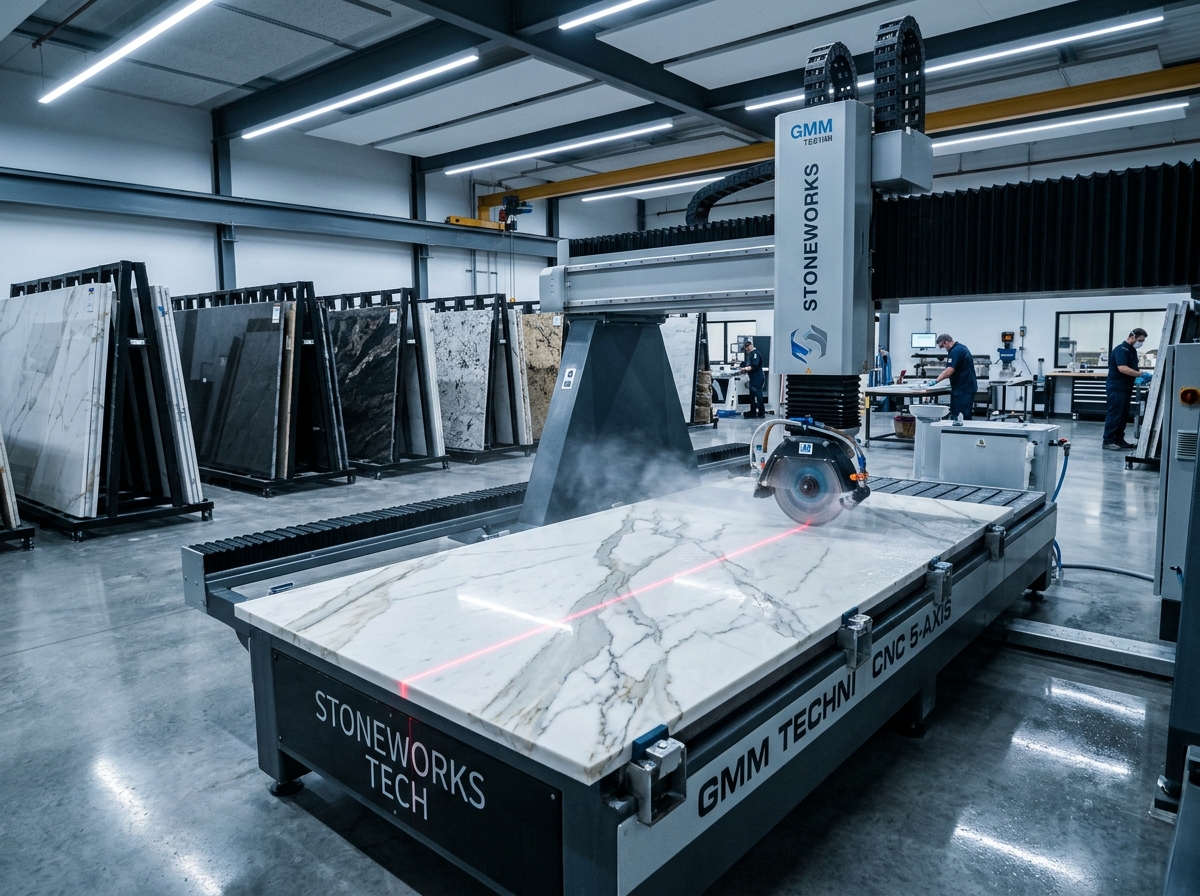
Slow Order Processing
Delays in order handling can affect customer responses and fulfillment.
 AI Automation
We help stone fabricators, countertop businesses, builders, and manufacturers automate purchase orders, quote entry, job creation, service tickets, and document processing.
Processing orders, preparing quotes, and managing project documents can involve hours of repetitive work. As your business grows, these tasks can increase costs, delay responses, and put pressure on your team.
Delays in order handling can affect customer responses and fulfillment.
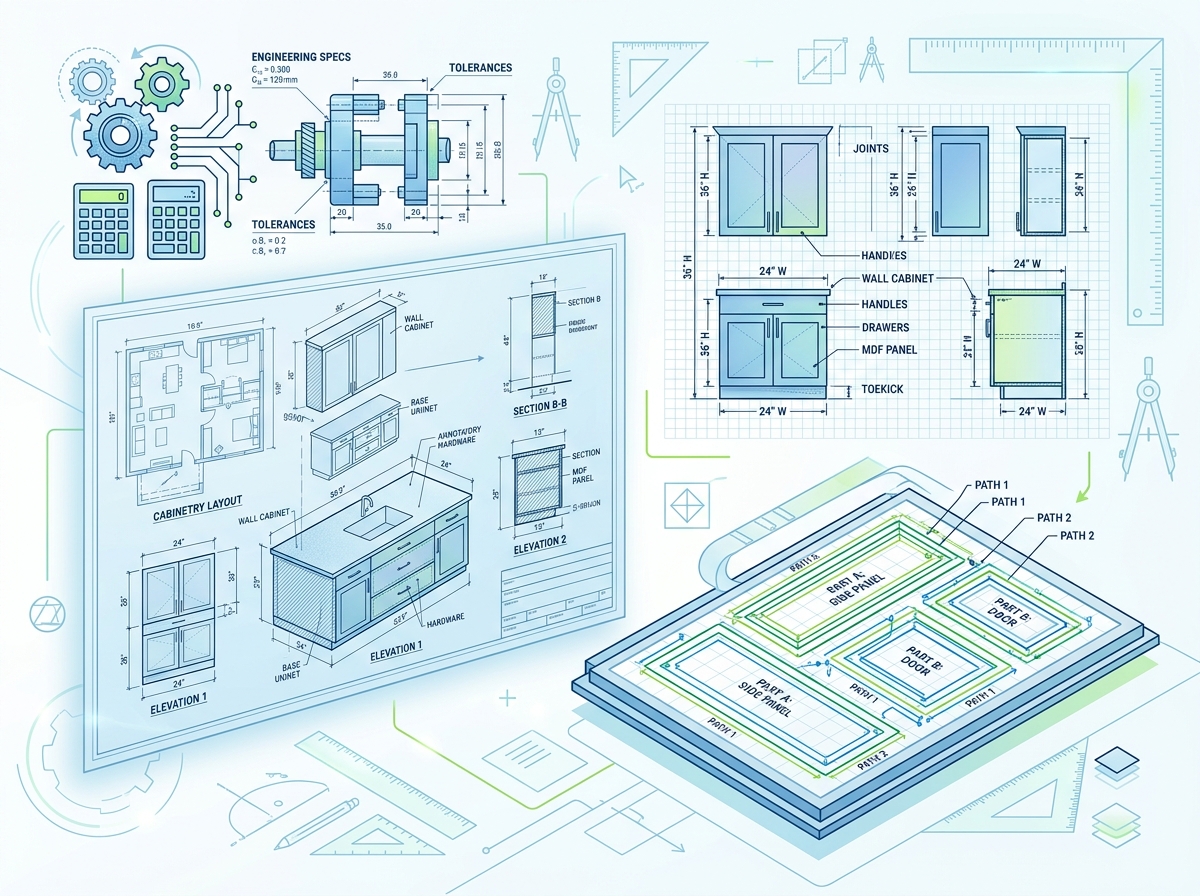
Missing or incorrect details lead to rework and corrections.

Routine paperwork and manual checks take up valuable time.

Entering the same information repeatedly limits productivity.

Growing order volumes create more work for your team to manage.

Time spent on repetitive tasks can increase the cost of daily operations.
Moksh CAD helps stone fabricators, builders, and manufacturers streamline orders, job entries, service workflows, and data processing.
Simplify order entry and quotation management.
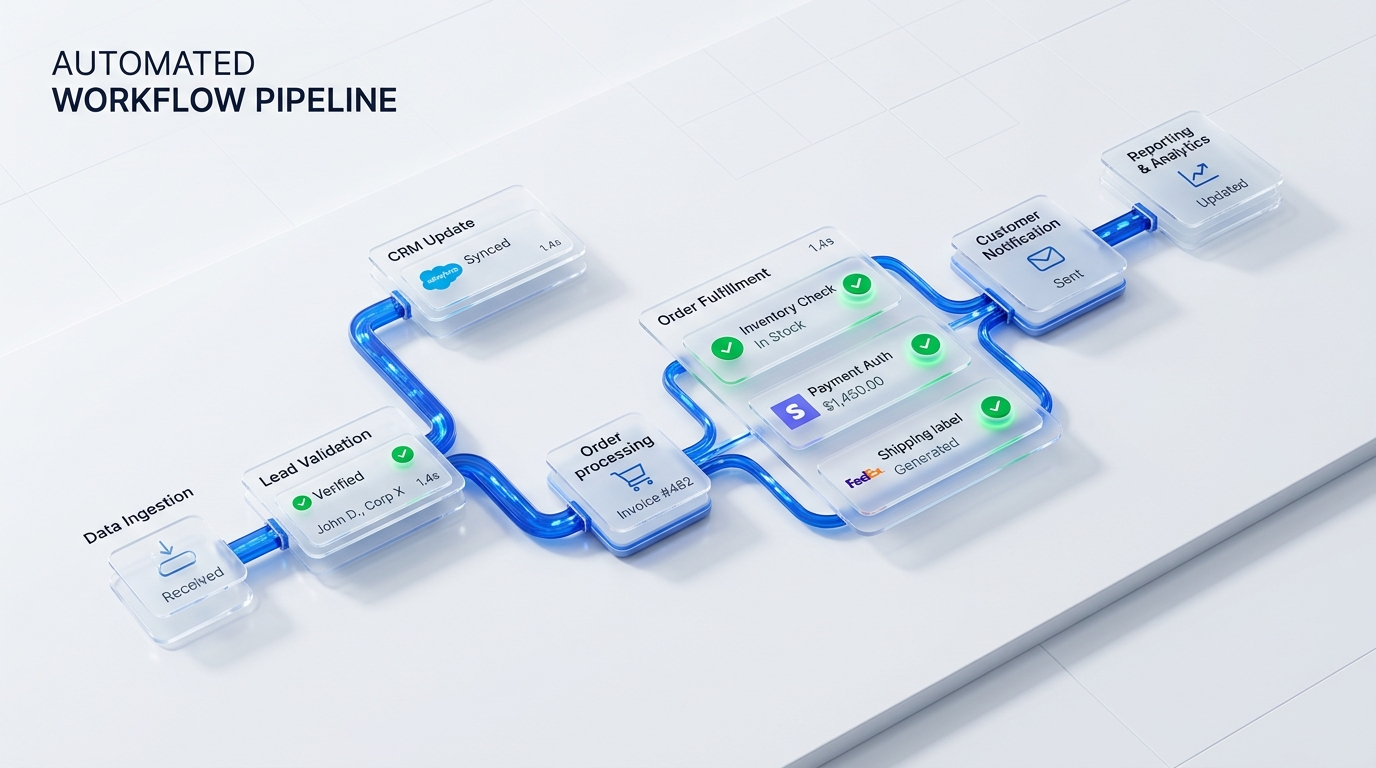
Simplify project setup and builder-specific workflows.
Streamline service requests, installation checks, and records.

Extract, validate, and organize information from business documents and data sources.
Every automation project starts with understanding how your team works and identifying tasks that can be handled more efficiently.
Understand your current workflow and identify automation opportunities.
Capture data from emails, PDFs, forms, and spreadsheets, then check it against your business rules.
Process, validate, and route information into supported systems and records.
Flag missing or uncertain information for your team to review.
Track workflow performance and identify opportunities to improve the process.
We help businesses simplify routine work related to orders, projects, documentation, and data management.
Automate quotes, purchase orders, job entries, and installation records.
Simplify builder-specific job entries, project records, and service documentation.
Reduce manual work in order processing, document handling, and data entry.
Simplify project data entry, technical documentation, and record management.
Moksh CAD combines experience in CAD, fabrication, estimation, and business operations to help businesses reduce repetitive work and streamline everyday processes.
Solutions shaped around fabrication, construction, and manufacturing workflows.
Move orders, quotes, and job records through routine tasks more efficiently.
Apply validation rules to identify missing details and inconsistencies.
Reduce repetitive data entry, document handling, and manual checks.
Free up time for customer requests and project requirements.
Manage growing workloads with more streamlined processes.
Assess options for connecting automation with your existing software.
Flag incomplete or uncertain information for review.
Results depend on the task, document quality, business rules, and available system integrations.
Explore common tasks that can benefit from AI-powered automation.
Capture purchase order details, match vendor information, and check rates against approved records.
Extract customer requirements, measurements, and material specifications to prepare quotation records.
Capture project information and organize job records for recurring builder workflows.
Create service tickets, check installation photos against defined requirements, and organize supporting documents.
Extract structured information from supported PDFs, emails, scanned documents, and forms for use in business systems.
Check records against defined rules and automate parts of routine reporting.
Explain which tasks take the most time and how your team currently handles them.
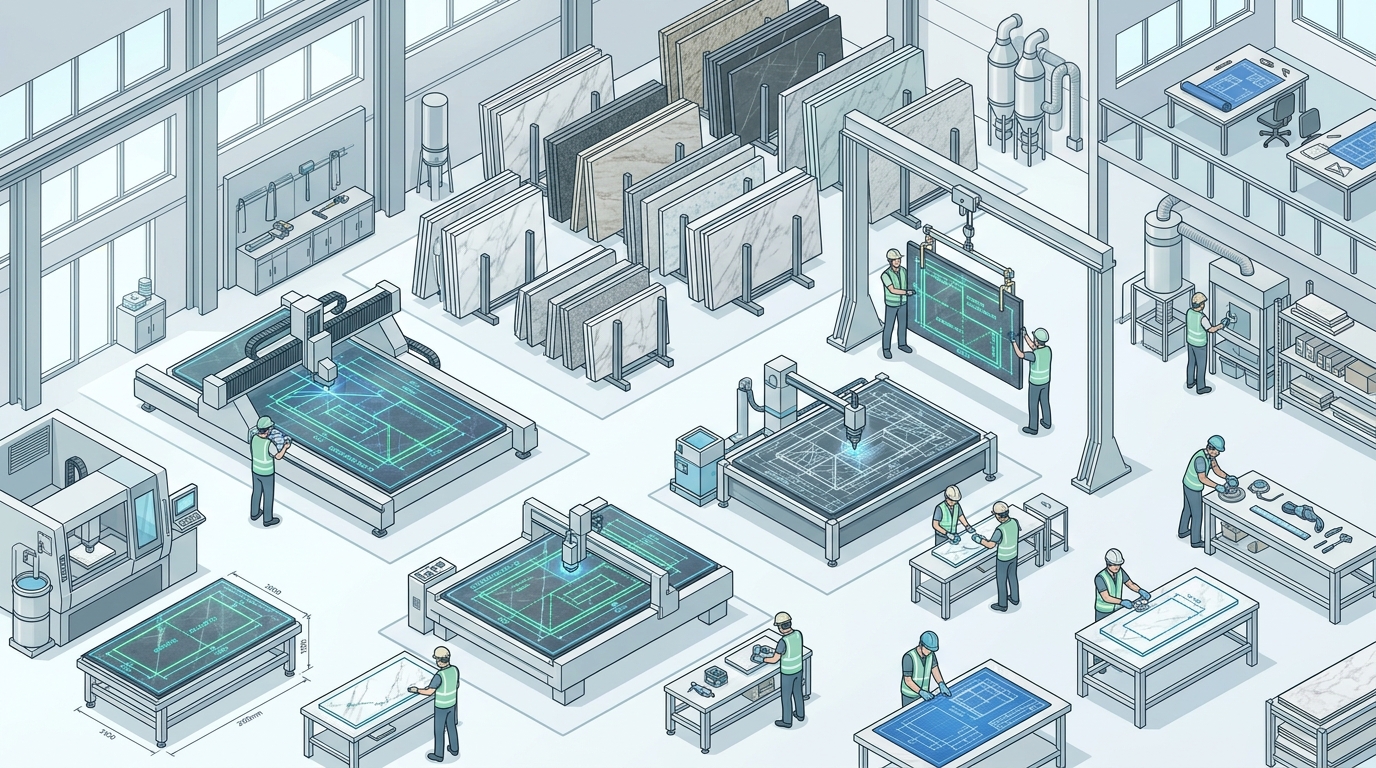
Clear answers about AI automation for stone fabricators, countertop businesses, builders, and manufacturers.
AI automation services use AI and workflow tools to handle repetitive tasks such as data entry, document processing, order management, and reporting. They can reduce manual work and help organize business information.
Stone fabricators can use automation for purchase orders, quote entry, job creation, service tickets, and installation documentation. This can reduce repetitive administrative work and give teams more time for production and customer requirements.
Yes. Automation can extract vendor, product, quantity, and pricing details from purchase orders and enter them into supported systems. Validation rules can flag missing or inconsistent information for review.
Yes. Automation can capture customer details, measurements, material requirements, and project specifications from supported documents. Pricing checks can also be included when the relevant business rules are available.
Workflows can be configured to capture project details, check required information, and organize job records for Ryan Homes and Pulte Homes processes. The available automation depends on the systems and requirements involved.
In many cases, yes. Compatibility depends on the software, available integrations, access permissions, and technical requirements. These factors should be assessed before implementation.
Yes. AI-powered document processing can extract information from supported PDFs, emails, scanned documents, forms, and spreadsheets. The extracted data can be checked against defined rules before it is used.
Automation can check photos against defined documentation requirements and capture information needed for warranty records. Cases requiring physical inspection or additional judgment should be reviewed by a person.
The timeline depends on workflow complexity, document formats, business rules, integrations, and testing requirements. A timeline can be estimated after the process has been reviewed.
Start with tasks that are repetitive, time-consuming, and governed by clear rules. A workflow assessment can help identify suitable starting points.